Living on the Costa Cálida

Buying a home on the Costa Cálida as your new or second home

The warm coast of Murcia: the mildest winters on the Spanish mainland, the Mar Menor as a large, shallow bathtub and prices lower than on the Costa Blanca. Independent buying guidance since 2005, at every step.

Coastline
250 km
Zones
5
Flight from Schiphol
2 h 40 (to Alicante)
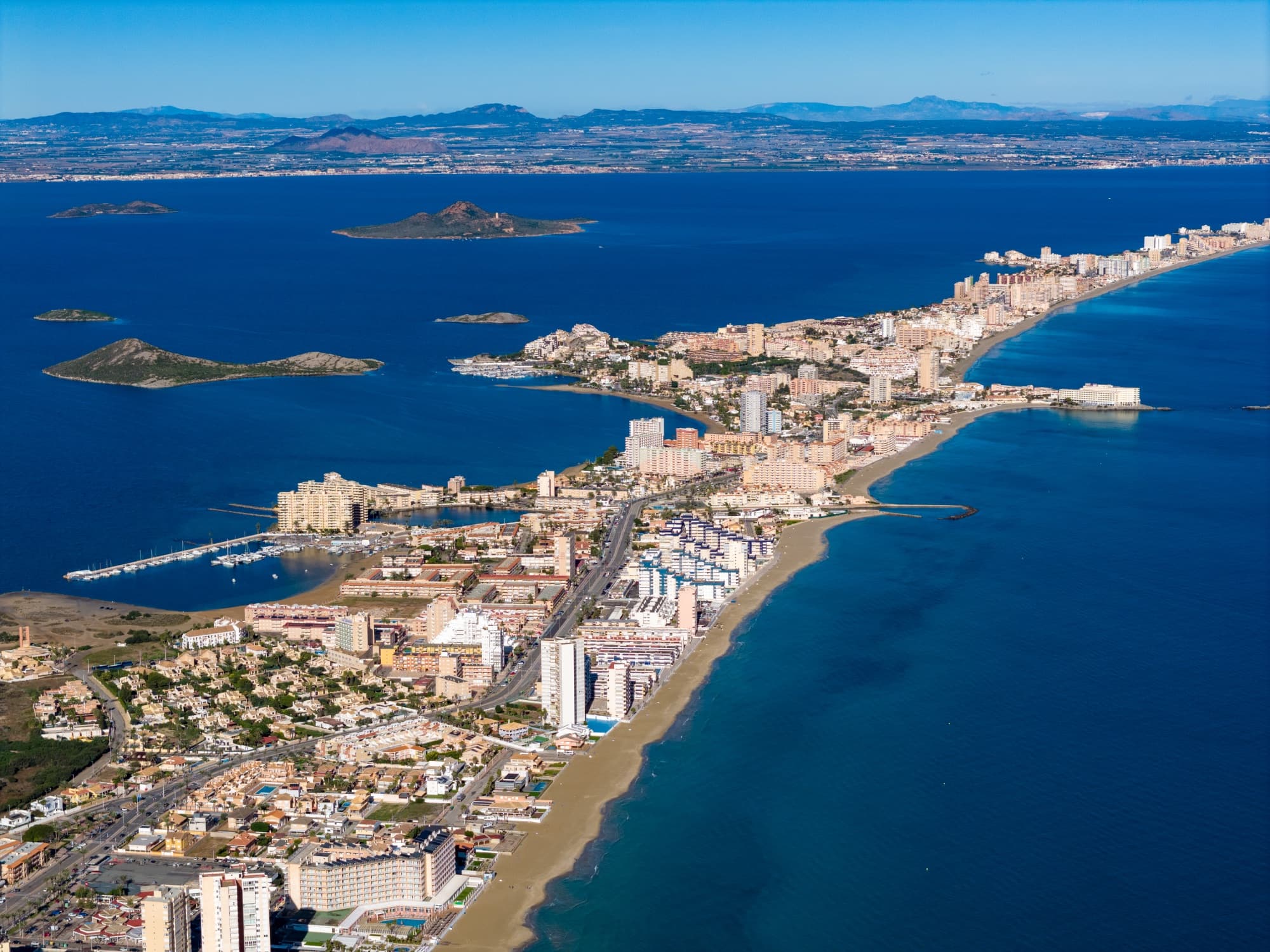
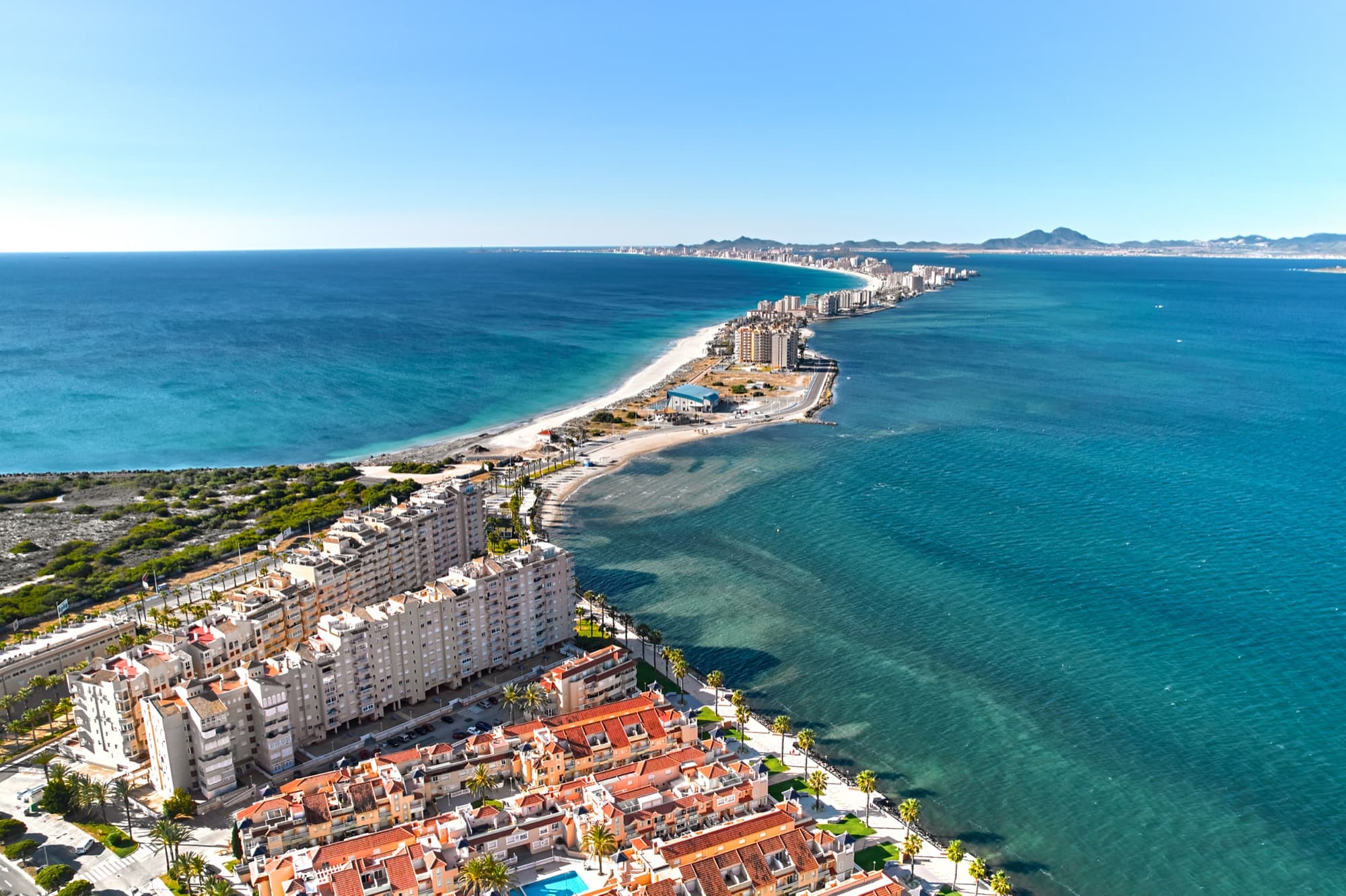
The La Manga strip between the Mar Menor and the Mediterranean Sea
320
Sunny days per year around the Mar Menor. In winter it usually stays above 16 degrees during the day.
<300 mm
Rain per year. Together with Almería the driest coast in Spain.
2
Airports: Murcia half an hour away, Alicante three quarters of an hour.
About the Costa Cálida

Why more and more buyers end up at the Mar Menor

The name says it all Costa Cálida means warm coast, and it is true. Around the Mar Menor it is almost always spring: nowhere on the Spanish mainland are the winters milder, and the sun shines some 3,000 hours a year.

The Mar Menor is unique in Europe This large saltwater lagoon is shallow, sheltered and 2 to 4 degrees warmer than the open sea. Swimming, sailing and paddleboarding are possible here months longer than elsewhere, always in calm water.

You buy at a sharper price here than on the Costa Blanca The price level is clearly lower than just across the border at Pilar de la Horadada, while you get the same sun and sea. The market has caught on by now: the municipalities around the Mar Menor are rising fastest in the region.

Better connected than you think Murcia airport is half an hour from the Mar Menor, Alicante airport three quarters of an hour from San Pedro del Pinatar. So you have two airports, and the AP-7 simply continues.

Five different atmospheres along one strip From the salt flats and mud baths of San Pedro to the port city of Cartagena with its Roman theatre, from the La Manga strip to the quiet bays beyond Mazarrón. All more Spanish than you expect.

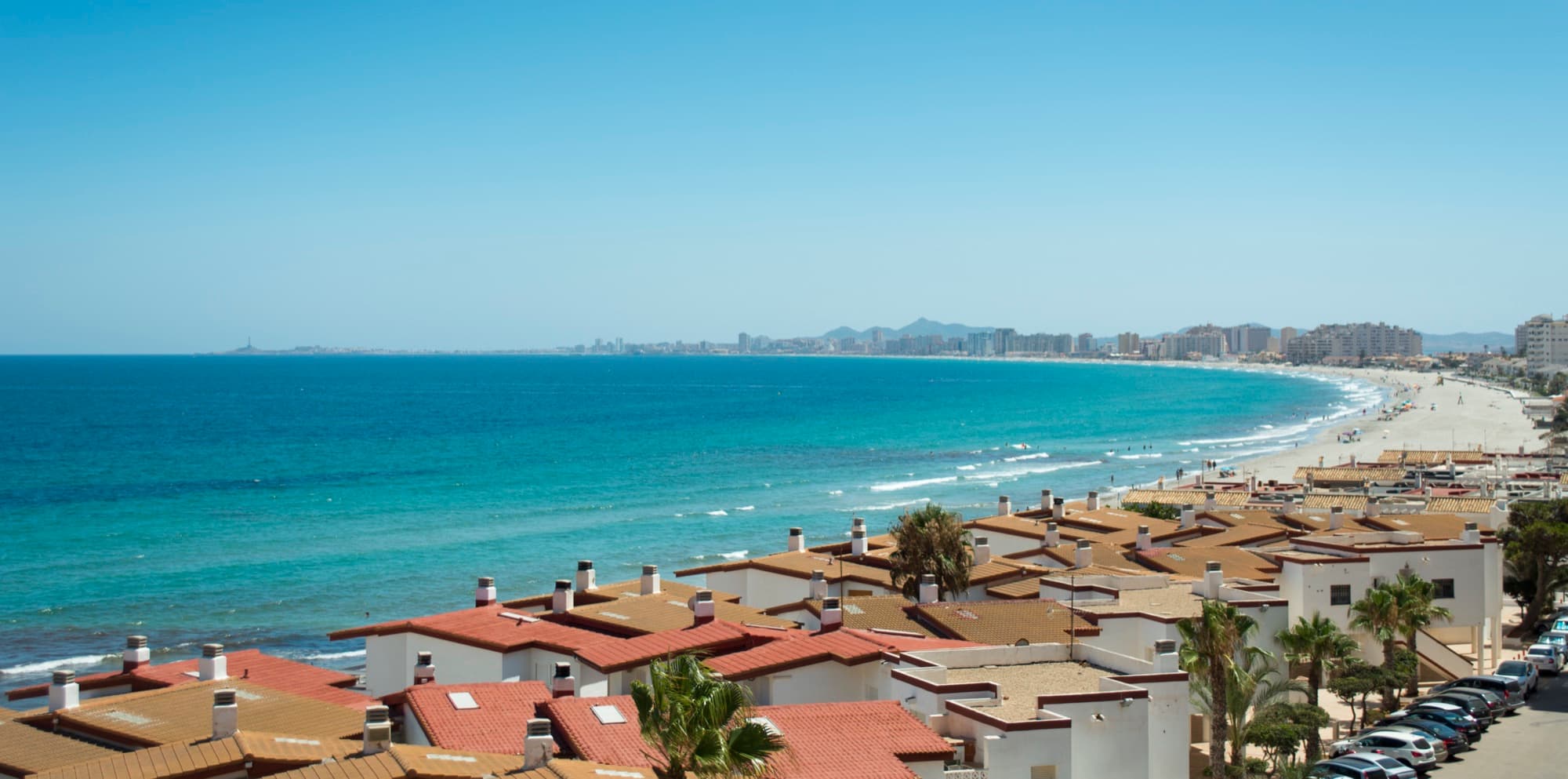
Homes on the beach of La Manga on the Mar Menor
A popular combination
Overwintering around the Mar Menor, with a home you can easily lend to family and friends in summer.
Five faces of the Costa Cálida

San Pedro, Los Alcázares, La Manga, Cartagena or Mazarrón: which zone suits you?

The Costa Cálida is not one place, it is five places. Between San Pedro del Pinatar on the border with the Costa Blanca and Águilas towards Andalusia, character, pace and price differ strongly. For most buyers, one zone clearly fits better than the rest.

The beach of San Pedro del Pinatar01
San Pedro del Pinatar and Lo Pagán
Between two seas
Karakter

Seaside town next to the natural park with the salt flats, known for its mud baths. Alive all year round.

Voor wie

Overwinterers, walkers, those who want the amenities of the Costa Blanca around the corner.

Property types

Apartments, bungalows, new-build within walking distance of the sea.

Inhabited year-round
Los Alcázares and Santiago de la Ribera02
Los Alcázares and Santiago de la Ribera
West shore of the Mar Menor
Karakter

Boulevards along calm lagoon water, golf courses in the back garden, plenty of new-build.

Voor wie

Water sports enthusiasts, golfers, families, those who want new-build.

Property types

Apartments on the boulevard, townhouses on golf resorts, villas.

Golf and lagoon
The La Manga strip between the Mar Menor and the Mediterranean Sea03
La Manga del Mar Menor and Cabo de Palos
The strip
Karakter

Narrow strip of land with sea on two sides. Cabo de Palos is a diving and fishing village.

Voor wie

Beach lovers, divers, those who want to swim in the lagoon in the morning and in the sea in the afternoon.

Property types

Apartments with double sea views, penthouses on the water.

Sea on two sides
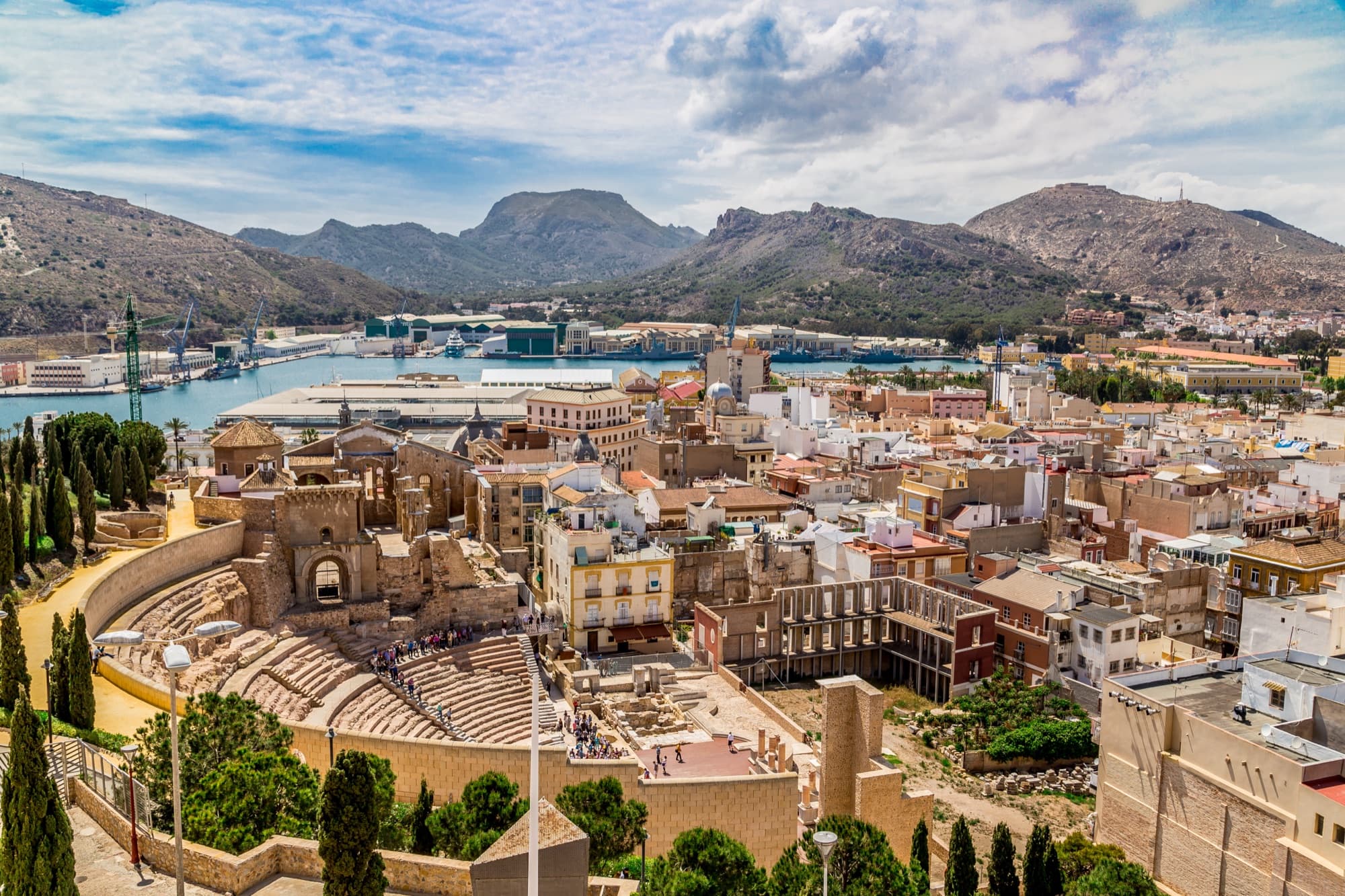
The Roman theatre and the harbour of Cartagena04
Cartagena city
Urban
Karakter

Port city with three thousand years of history and a Roman theatre in the middle of the centre. Alive all year round.

Voor wie

City people, culture lovers, those who want to live without a car.

Property types

City apartments, historic buildings under renovation.

No winter vacancy
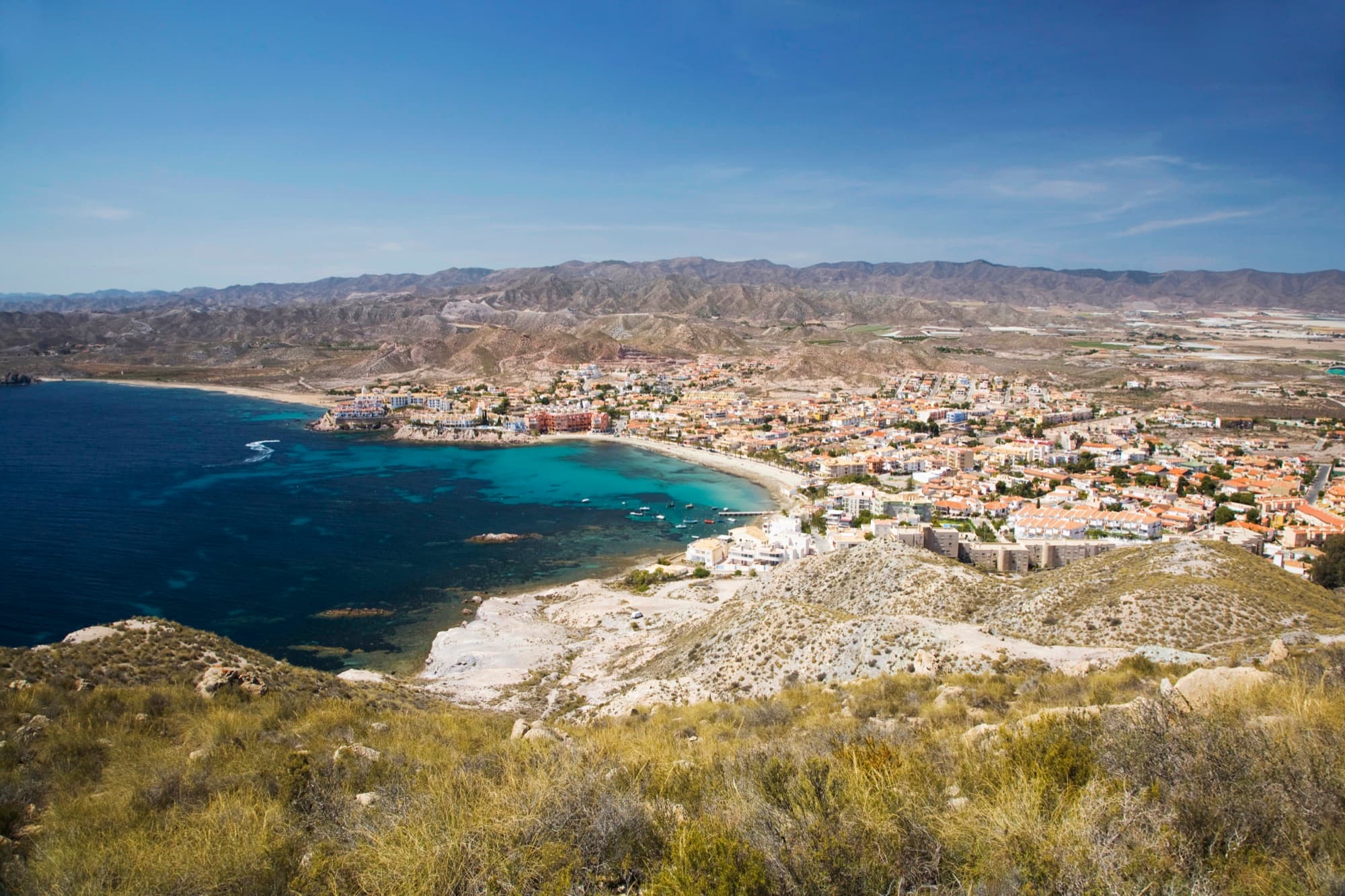
The bays and the coastal village near Mazarrón05
Mazarrón and Águilas
South-west coast
Karakter

Bays, fishing villages and the lowest price level of the entire coast. Noticeably more Spanish.

Voor wie

Peace-seekers, price-conscious buyers, those coming to live year-round.

Property types

Apartments, sea-view villas, fincas in the hinterland.

More Spanish, lowest entry
Not sure which zone?

We think along with you

Tell us what matters to you (lagoon or open sea, golf, city or peace) and you get a first recommendation per zone.

Schedule an introduction
Climate

The climate around the Mar Menor: 3,000 hours of sunshine and the mildest winters in Spain

The Costa Cálida is officially semi-desert: less than 300 millimetres of rain per year, 3,000 hours of sunshine, and winters in which the average temperature does not drop below 10 degrees. The figures below are long-term averages for the coastal strip around the Mar Menor.

Jan
11°
6 h
3 d
Feb
12°
7 h
3 d
Mar
14°
8 h
3 d
Apr
16°
9 h
3 d
May
19°
10 h
3 d
Jun
23°
11 h
1 d
Jul
26°
12 h
0 d
Aug
27°
11 h
1 d
Sep
24°
9 h
3 d
Oct
20°
8 h
4 d
Nov
15°
6 h
3 d
Dec
12°
6 h
3 d
Sun hours per day

Averaged across the coastal strip. Even in January you get six hours of sun a day here.

Rain days per month

October is the wettest month, with short showers. In July usually nothing falls at all.

Microclimate

The shallow Mar Menor warms up quickly and keeps its shores noticeably milder in spring and autumn. On the coast a light easterly breeze tempers the summer heat.

When should you come to look?

April, May, October and November give the most honest picture

Not the crowds of summer, but the climate this coast owes its name to. You see the seaside towns at their normal pace. August is too busy to get a good picture.

Plan a viewing trip
Accessibility

Travel time to the Costa Cálida: flying to Murcia or Alicante

01
Flying

Alicante airport (ALC) is three quarters of an hour from San Pedro del Pinatar, with daily flights from Schiphol, Eindhoven, Rotterdam and Brussels. Murcia airport (RMU) is half an hour from the Mar Menor: from Belgium TUI fly serves it in season from Antwerp and Ostend; from the Netherlands the offering varies.

02
Car

From Northern Europe it is roughly 21 to 22 hours of driving via France. With an overnight stop you can do it comfortably in two days. The AP-7 continues toll-free into the region.

03
Train

The high-speed train (AVE) connects Murcia with Madrid in around three hours. Via Alicante you are there in 2.5 hours.

04
Within the region

The AP-7 and the N-332 string the coastal towns together. The terrain around the Mar Menor is flat and easy to cycle. Cartagena has all city amenities a quarter to half an hour from the lagoon.

Travel times to Alicante (ALC)
AMS
Schiphol
2 h 40
1,700 km
EIN
Eindhoven
2 h 40
1,700 km
RTM
Rotterdam
2 h 35
1,690 km
BRU
Brussels
2 h 30
1,620 km
CRL
Charleroi
2 h 25
1,600 km
Flights per week
60+ (Alicante)
Airlines
KLM, Transavia, easyJet, Vueling, Ryanair, TUI fly
International community

The international community on the Costa Cálida, from San Pedro to Mazarrón

The Costa Cálida is more Spanish than the Costa Blanca, and precisely that attracts its own group of international buyers: people who want to keep the amenities of Torrevieja within driving distance, but live among the Spanish.

The community is smaller, but close-knit. The Dutch-speaking Club Mazarrón has existed since 2008 and has over 270 members. Around the Mar Menor you also have the Dutch-speaking network of Torrevieja and Orihuela Costa half an hour away.

International amenities are growing along with the golf resorts. Britons and Irish are the largest foreign group here, and with English you can get by anywhere on the coast.

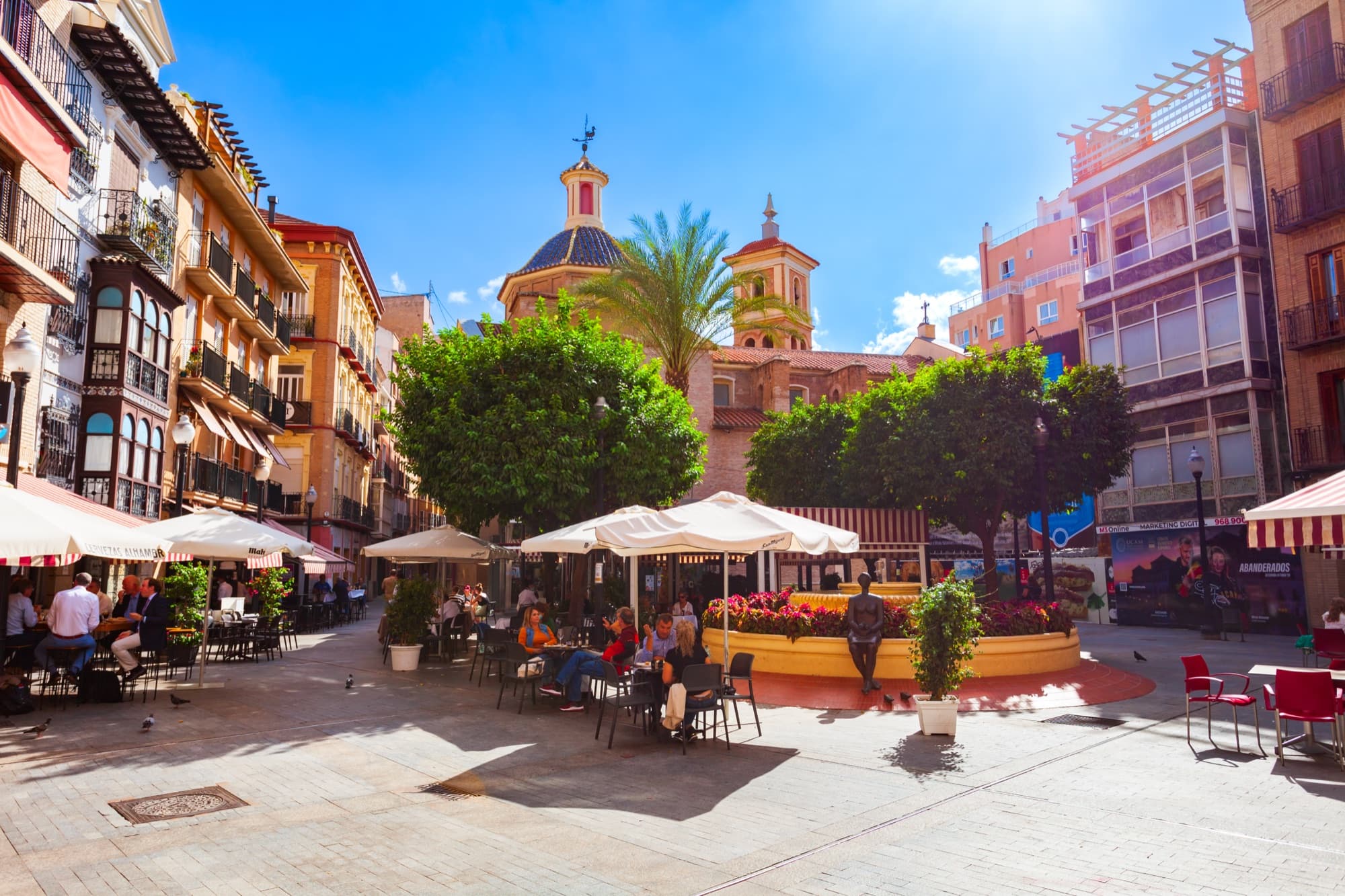
Terraces on a square in Murcia
Smaller, closer-knit
Dutch and Belgians

A growing group of residents and overwinterers, especially around the Mar Menor and Mazarrón.

Half an hour away
Dutch-speaking care

Dutch-speaking GPs and dentists around Torrevieja and Orihuela Costa. In the region itself, mainly English-speaking practices.

270+
Dutch-speaking Club Mazarrón

Since 2008, with activities for residents and overwinterers.

For families

International schools on the Costa Cálida and in Murcia

For the northern side of the region, El Limonar International School (ELIS Villamartín), just across the border, is the reference: a British curriculum from ages 3 to 18, with school buses to San Pedro del Pinatar and San Javier.

Towards Murcia city lies the original ELIS campus, and the offering around the city is growing. The Spanish public school here is fully Spanish-language, without the second language you have on the Costa Blanca. For young children that is an accessible route.

The choice depends on how long you are coming and what you want for your child. We include the school choice in our advice on the zone.

Selection of schools, by curriculum
International (British)
  • ELIS Villamartín
    San Miguel de Salinas · British, ages 3 to 18, school buses to San Pedro and San Javier
  • ELIS Murcia
    Murcia · British, since 1990
Around Murcia city
  • King's College Murcia
    Murcia · British, ages 2 to 18
Spanish public (free)
  • Fully Spanish-language
    per municipality

School fees range from €0 (public school) to well over €10,000 per year (British schools in the upper years). If the choice becomes complex, we connect you with an education adviser.

Good care, in your language

Healthcare on the Costa Cálida: San Javier, Cartagena and Murcia

Spain has two healthcare systems side by side: the public system (SNS) and private clinics. The public system is free if you work in Spain or have an EU state pension, and the quality is good. For an appointment with a specialist you sometimes wait a little longer. That is why many foreigners take out a supplementary private policy.

The public Hospital Los Arcos del Mar Menor in San Javier sits in the middle of the core area, and Cartagena has a large regional hospital in Santa Lucía. Privately you have Quirónsalud in Murcia and Cartagena, among others, and the private offering of Torrevieja is half an hour away.

Do you receive a state pension from another EU country? Then you take your healthcare rights to Spain with an S1 form, a statement from your home country's health authority. You use it to register with the Spanish public system, and your health insurance at home does not need to continue.

Los Arcos del Mar Menor
Santa Lucía Cartagena
Quirónsalud Murcia
Quirónsalud Torrevieja
Practical: how to arrange it
  • 01
    Pension and the S1 form
    Do you have a state pension? Apply for the S1 form in your home country and submit it to the Spanish health office. Your rights come with you.
  • 02
    Workers and residents
    If you work in Spain, your health contribution runs through your employer or your registration as self-employed. If you do not work and do not yet have a pension, you buy into the public system via the convenio especial: a fixed monthly contribution of roughly €60 to €160.
  • 03
    A private policy as a supplement
    Sanitas, Adeslas or DKV: expect €60 to €200 per person per month, depending on age and cover. You see a specialist sooner and there is often an interpreter.
  • 04
    Second home, not a resident
    Your European Health Insurance Card (EHIC) covers emergency care. If you are in Spain often or for long periods, a private policy is sensible.
  • 05
    Dutch-speaking care
    Via the network around Torrevieja, half an hour's drive away. In the region itself there are English-speaking practices. We share our list.
  • 06
    Pharmacy (farmacia)
    On every street corner. Many medicines are available without a prescription and often cheaper than at home.
Prices by zone

What does a home by the Mar Menor or in Mazarrón cost? Prices by zone

A first picture to calibrate your expectations. The municipalities around the Mar Menor are rising fastest in Spain: in early 2026 Los Alcázares, San Pedro and San Javier recorded year-on-year increases of more than 30%, from an average of around €2,400 to €2,600 per m² (idealista, 2026). That is still clearly below the level of the Costa Blanca. We give you a sharper estimate per search profile.

Zone
Apartment
Townhouse
Villa
Premium
01 San Pedro and Lo Pagán
€170,000 to 350,000
€230,000 to 420,000
€380,000 to 750,000
€750,000+
02 Los Alcázares and Santiago de la Ribera
€190,000 to 400,000
€260,000 to 480,000
€420,000 to 900,000
€900,000+
03 La Manga and Cabo de Palos
€180,000 to 450,000
€280,000 to 550,000
€450,000 to 1.1 million
€1.1 million+
04 Cartagena city
€140,000 to 320,000
€220,000 to 450,000
€380,000 to 750,000
€750,000+
05 Mazarrón and Águilas
€140,000 to 300,000
€200,000 to 400,000
€330,000 to 700,000
€700,000+
Toelichting
2 bedrooms, 70 to 95 m²
3 bedrooms, 110 to 180 m²
3 to 4 bedrooms, 200 to 400 m²
Frontline beach or prime location

Prices exclude purchase costs. For resale property in the Region of Murcia you pay 7.75% transfer tax (ITP, rate since July 2025). For new-build you pay 10% VAT plus 1.5% stamp duty (AJD). On top of that, allow 1 to 2% for notary and registration.

Indication based on asking prices in the market, reference date September 2026. We keep this table up to date.

Homes that are not openly for sale can fall below or above these ranges.

Marco Ianiero, regional expert Costa Cálida
Marco Ianiero · Costa Cálida
Your regional expert

Marco Ianiero, your buyer's agent on the Costa Cálida

I am from Genk in Belgian Limburg and live in Ciudad Quesada, half an hour from the Mar Menor. I guide buyers on the Costa Blanca South and the Costa Cálida, whether you are looking for a holiday home or want to move for good. Tell me what you are looking for and I immediately know which places would suit you.

Homes that are not yet openly for sale, I hear about through project developers, through my network and by going into the region myself. A lot is happening on the Costa Cálida right now, and I see it up close. My clients most often describe my guidance as dependable and involved.

Region
Costa Cálida and Costa Blanca South
Speciality
New-build and golf resorts
Guidance
From first wish to keys
Languages
NL · EN · ES

Dependable, involved and honest about what suits you.

Frequently asked questions

Frequently asked questions about living on the Costa Cálida

The questions we hear most often about living on the Costa Cálida. Missing something? Ask Marco directly.

The coast simply continues, but the atmosphere changes at the border with Murcia. The Costa Cálida is more Spanish, quieter and cheaper. The Dutch-speaking community is smaller and the amenities of Torrevieja are half an hour away. Those who want the sun of the Costa Blanca without the crowds often end up here.

Interested in the Costa Cálida?

Want to know whether the Costa Cálida suits you?

In a no-obligation conversation of an hour, Marco tells you what suits you, what does not, and which zone fits your situation. We have guided buyers in Spain since 2005, with more than 800 purchases to date.