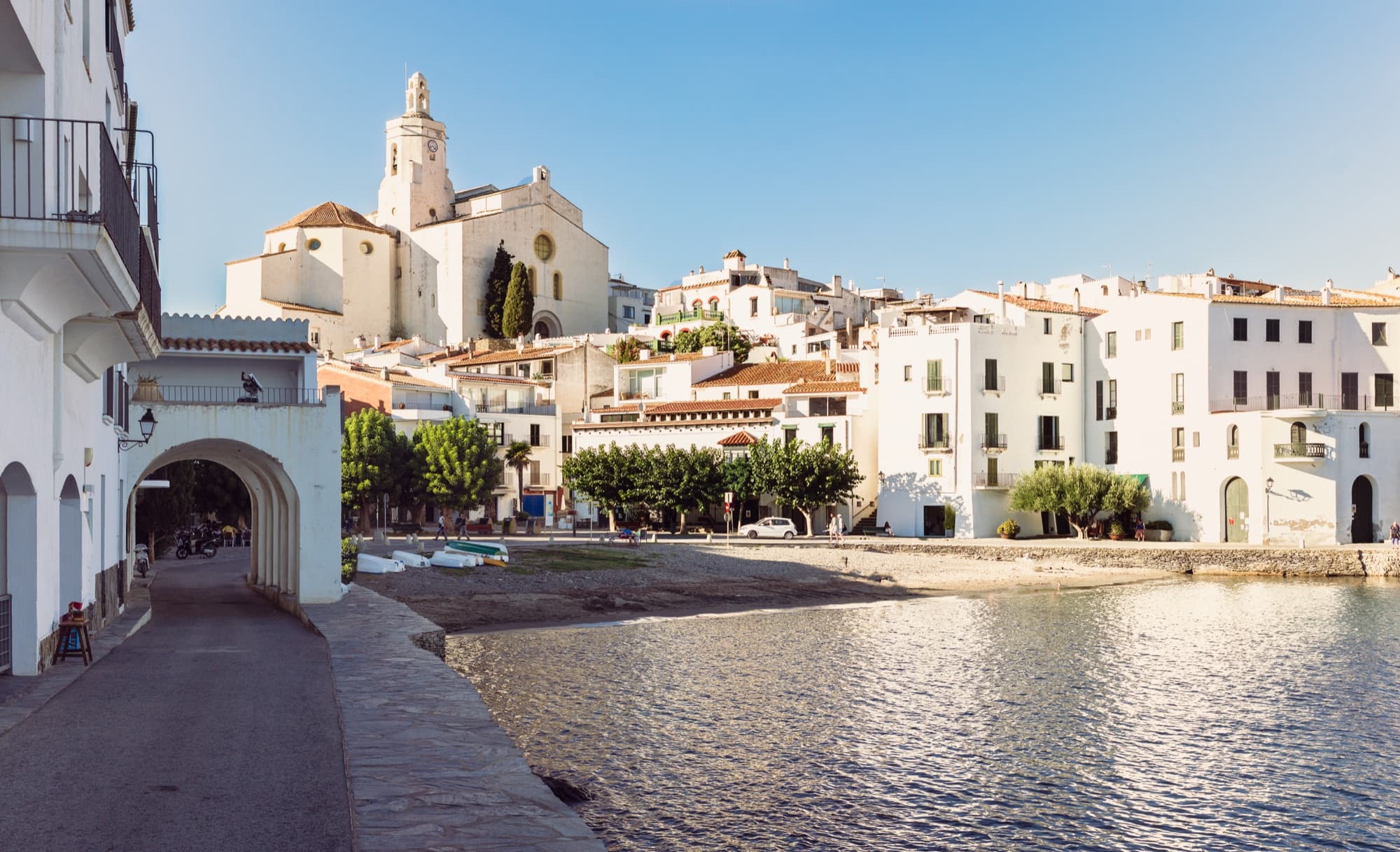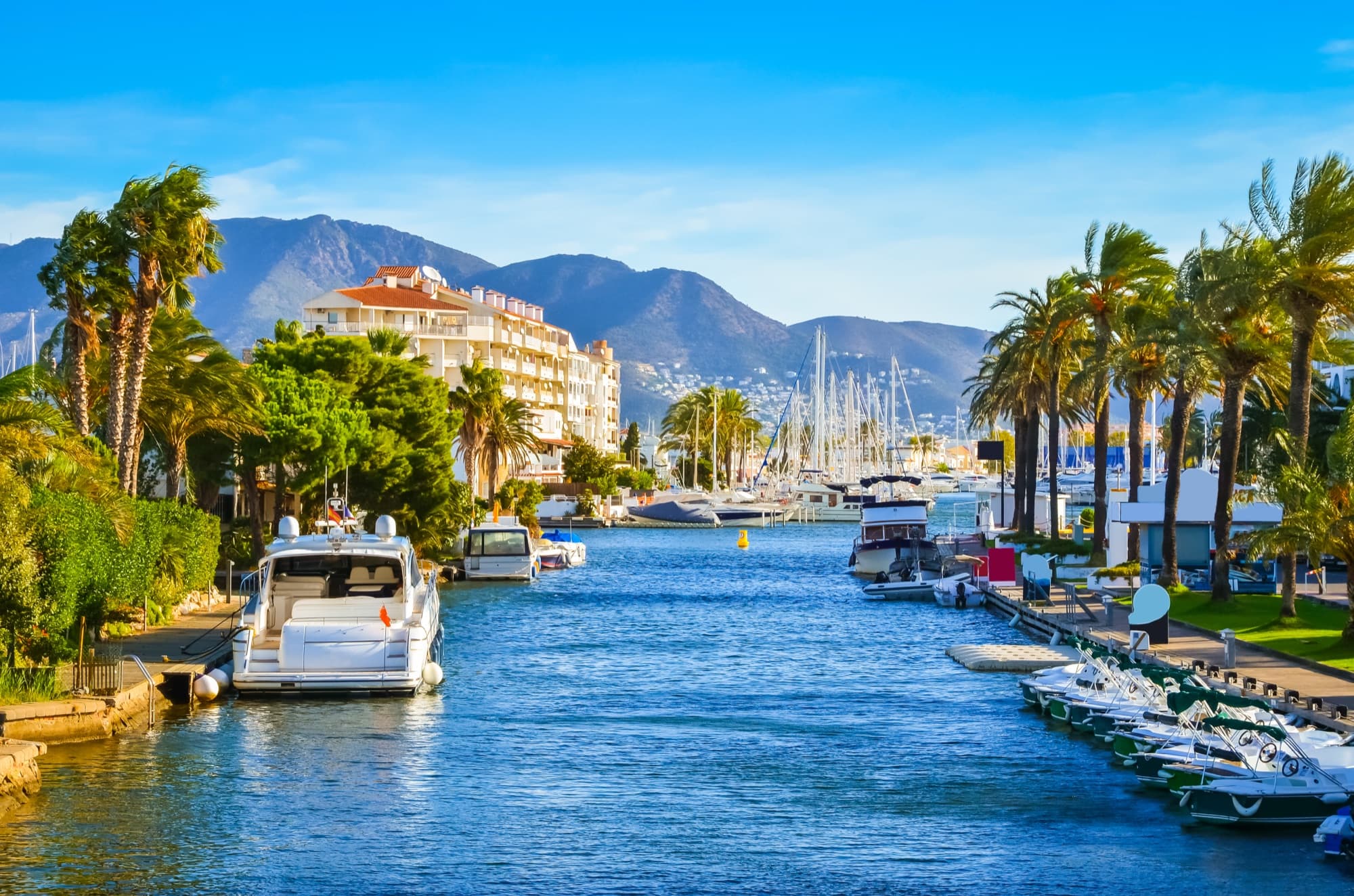
01The liveliest stretch, closest to Barcelona. Tossa is a walled jewel.
Those who put amenities and accessibility first, those looking for a first second home.
Apartments, homes in residential areas on the hills.
The wild coast of Catalonia: pebble bays beneath pine forests, medieval villages in the hinterland, and all of it within a day's drive of north-west Europe. Independent buyer guidance since 2005, at every step.

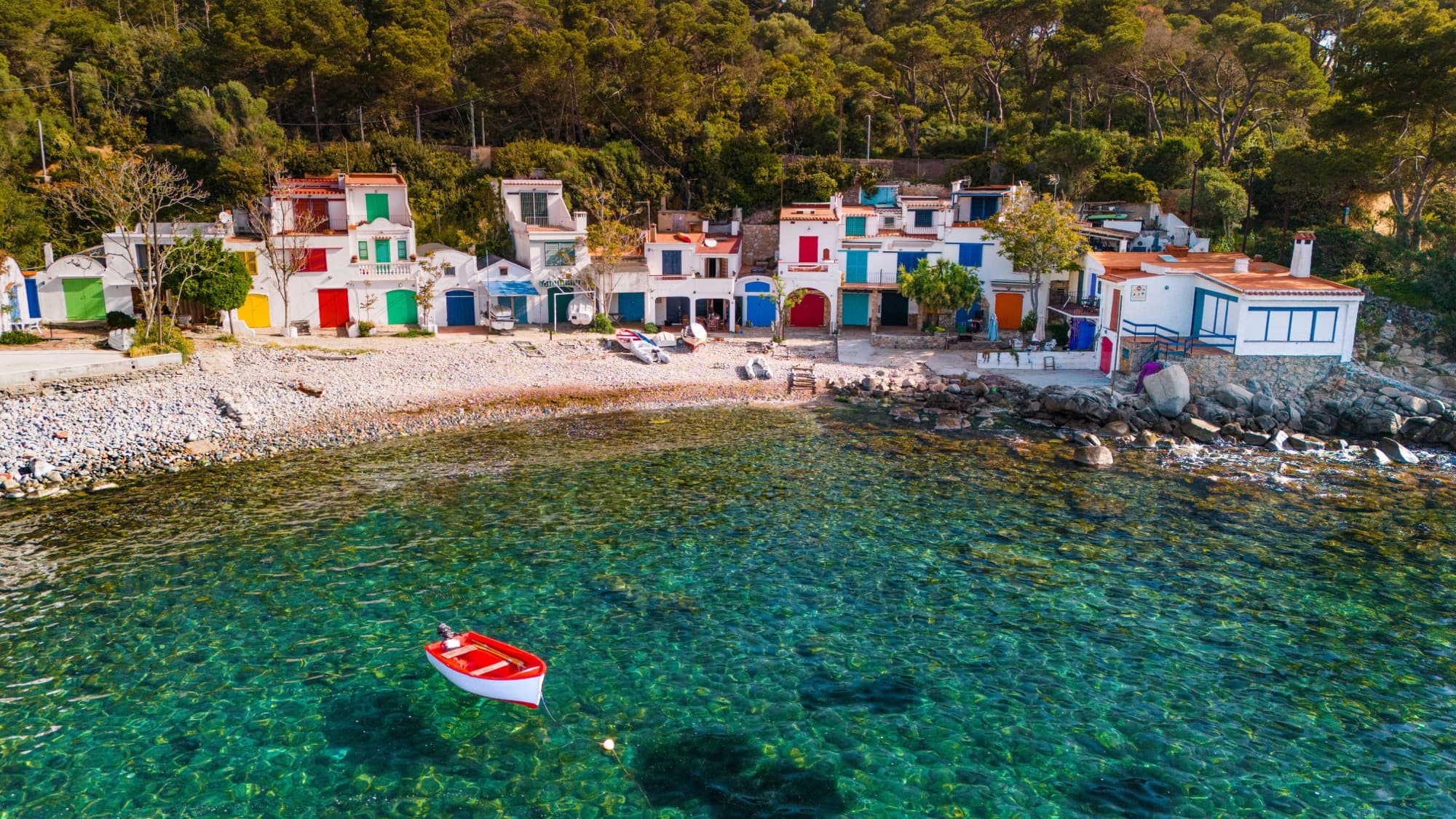
The most beautiful coastline in Spain, Spaniards say so too Brava means wild: capes and pebble bays, pine forests right down to the water and coastal paths (camins de ronda) that string the villages together. Anyone who has swum at Calella de Palafrugell once understands the price tag.
You simply drive there From much of north-west Europe it is one long day or two easy stages, and the TGV from Paris stops in Figueres, in the middle of the region. No other Spanish coast is this easy to reach without a plane.
The hinterland plays a full part Medieval villages such as Pals and Peratallada, the vineyards of the Empordà, Girona half an hour away and the Dalí heritage around Figueres and Cadaqués. Even in May and October there is plenty to do here.
Milder summers, real seasons Summer here rarely climbs above 30 degrees, more pleasant than the heat of the south. In return, winter is cooler and many resort towns are quiet then. This is a seasonal coast, and that is part of the choice.
Five different atmospheres along one stretch From lively Lloret to fashionable S'Agaró, from the bays around Begur to the forty kilometres of canals at Empuriabrava, with Cadaqués as the artistic finale.

The Costa Brava is not one place, it is five places. Between Blanes in the south and Cap de Creus near the French border, character, price and seasonal rhythm differ sharply. For most buyers, one zone clearly fits better than the rest.
01The liveliest stretch, closest to Barcelona. Tossa is a walled jewel.
Those who put amenities and accessibility first, those looking for a first second home.
Apartments, homes in residential areas on the hills.
02Shopping streets open all year round, the villas of S'Agaró, wide beaches.
Those who want to combine luxury with winter life. The region's British school is here too.
Seafront apartments, villas, penthouses.
03Calella, Llafranc, Tamariu and Aiguablava: the postcards of the Costa Brava, with medieval Pals behind them.
Budgets from €500.000, seekers of quality and calm, those who have known this coast for years.
Villas with sea views, village houses, apartments on the bay.
04Forty kilometres of canals with a mooring at your door, wide sandy beaches, many Northern Europeans.
Water sports lovers, boat owners, those who choose sand over pebbles.
Canal homes with private moorings, apartments, villas.
05A whitewashed artists' village in a natural park, reachable only by a mountain road. Dalí lived next door.
Those who value seclusion and character over convenience.
Village houses and a small number of villas. Supply here is always tight.
Tell us what matters to you (sand or bays, year-round or summer only, boat or mountain path) and you get an initial recommendation per zone.
The Costa Brava has a Mediterranean climate with real seasons: summers that rarely climb above 30 degrees, a long beach season from May well into October, and winters that are cooler than on the southern Costas. The figures below are long-term averages for the coastal strip.
July reaches a good ten hours of sun a day. The annual average is lower than in the south, mainly because of winter.
April and October are the wettest months; summer is dry and clear. The rain keeps the pine forests and the Empordà green.
The tramuntana, the north wind, can blow hard for days around Roses and Cadaqués, especially in spring and autumn. Further south, behind the capes, you notice little of it. We weigh position and wind exposure per property.
You see the coast at its best without the crowds of August, and you notice right away how a village feels outside high season. Exactly what you want to know before you buy.
From Utrecht or Antwerp it is around 1.300 kilometres: one long day's drive, or two easy stages with an overnight stop near Lyon. This is the only Spanish coast you drive to on a whim with a full car, bikes and the dog.
The TGV links Paris directly with Figueres-Vilafant, in the middle of the region. From Amsterdam or Brussels you reach the Costa Brava with one change in Paris. Girona and Barcelona are on the same line.
Barcelona (BCN) is 2 hours and 5 minutes from Schiphol and one to one and a half hours' drive from the coast. Girona (GRO) sits in the middle of the region: Ryanair flies there year-round from Eindhoven and Charleroi, Transavia in summer from Schiphol and Rotterdam.
The AP-7 (toll-free) and the N-II open up the whole coast. Girona is half an hour from the mid coast and is the hub for train and airport. For the bays and villages you need a car.
The Costa Brava has drawn Northern Europeans for decades, with the French, Germans, Belgians and Dutch leading the way. Because it is so easy to drive to, many owners are here genuinely often, rather than two weeks a year.
Empuriabrava and the Bay of Roses are the Northern European hub, with an established Dutch- and German-speaking community, its own entrepreneurs and service providers. Around Platja d'Aro and L'Escala you find a second cluster.
Beyond that, this is emphatically Catalan territory: village life, a language of its own and a strong local identity. If you love that, you will find more authenticity here than anywhere else in our working area.

An established group of residents and second-home owners, centred on the Bay of Roses.
GPs and dentists on the coast speak English, French and often German. Around Empuriabrava you also find Dutch-speaking providers.
Dutch-speaking entrepreneurs, water sports businesses and service providers around Empuriabrava and Roses form an informal network.
The International School Costa Brava in Platja d'Aro is the only British school in the province of Girona: from toddlers through to A-Levels. For families seeking British education, this school in practice determines the zone to live in.
Around Girona city there are also Saint George's School (English-language, up to the Spanish school-leaving exam), Montessori Palau and Montjuïc Girona International (with the IB diploma). The public school here teaches in Catalan, with Spanish as the second school language. A fine route for young children, a deliberate trade-off for older ones.
The choice depends on how long you are coming and what you want for your child. We include the school choice in our advice on the zone.
School fees range from €0 (public school) to roughly €9.500 to €14.500 per year at the British school. If the choice becomes complex, we put you in touch with an education adviser.
Spain runs two healthcare systems side by side: the public system (SNS) and private clinics. The public system is free if you work in Spain or receive a state pension from an EU country, and the quality is good. For a specialist appointment you sometimes wait a little longer. That is why many foreigners take out a supplementary private policy.
The Josep Trueta university hospital in Girona is the public regional hospital, with Hospital de Palamós and Hospital de Figueres as coastal hospitals closer by. Privately there is Clínica Girona, among others, and the top hospitals of Barcelona are just over an hour away.
Do you receive a state pension from an EU country? Then your healthcare rights travel with you to Spain via the S1 form, a statement issued by your home country's health service. You use it to register with the Spanish public system, and your health insurance at home need not continue.
A first picture to calibrate your expectations. For reference: Empuriabrava averages around €3.500 per m² (idealista, 2026) and in the bay triangle around Begur new villas start around €1,2 million. The offering runs from compact canal apartments to country estates; the spread here is wider than on any other Costa. We give you a sharper estimate per search profile.
Prices exclude purchase costs. For resale homes in Catalonia you pay a tiered transfer tax (ITP): 10% up to €600.000, 11% up to €900.000, 12% up to €1,5 million and 13% above that. For new-build you pay 10% VAT plus 1,5% stamp duty (AJD). On top of that, count on 1 to 2% for notary and registration.
Indication based on asking prices in the market, as of September 2026. We keep this table up to date.
Homes not publicly for sale can fall below or above these ranges.
We work on seven Spanish coasts. Three short comparisons with regions buyers often weigh against this one.
The wild coast within driving distance: bays, character and real seasons.
Directly to the south, flatter and sandier, noticeably cheaper and just as easy to reach.
A similar character with bays and villages, but with milder winters and life all year round.
City and sea combined, for those who choose urban life over coastal villages.
The questions we hear most about living on the Costa Brava. Missing something? Put your question directly to our team.
Cooler than on the southern Costas, with daytime temperatures of 12 to 15 degrees and nights that can approach freezing. Many resort towns run at a low ebb from November to March. If you want year-round life, choose Platja d'Aro, Sant Feliu, Figueres or Girona. We weigh the winter profile of each town in our advice.
In an obligation-free conversation of an hour, our team tells you what fits, what does not, and which zone matches your situation. Since 2005 we have guided Dutch and Belgian buyers in Spain, more than 800 purchases to date.