01Lively, year-round amenities, pink salt lakes as a backdrop.
Budget up to ±€300k, overwinterers, first second home.
Apartments, bungalows, penthouses along the boulevard.
One of the sunniest and driest corners of Europe, with a large international community just around the corner. From Alicante to Pilar de la Horadada. We guide you through every side of the purchase.

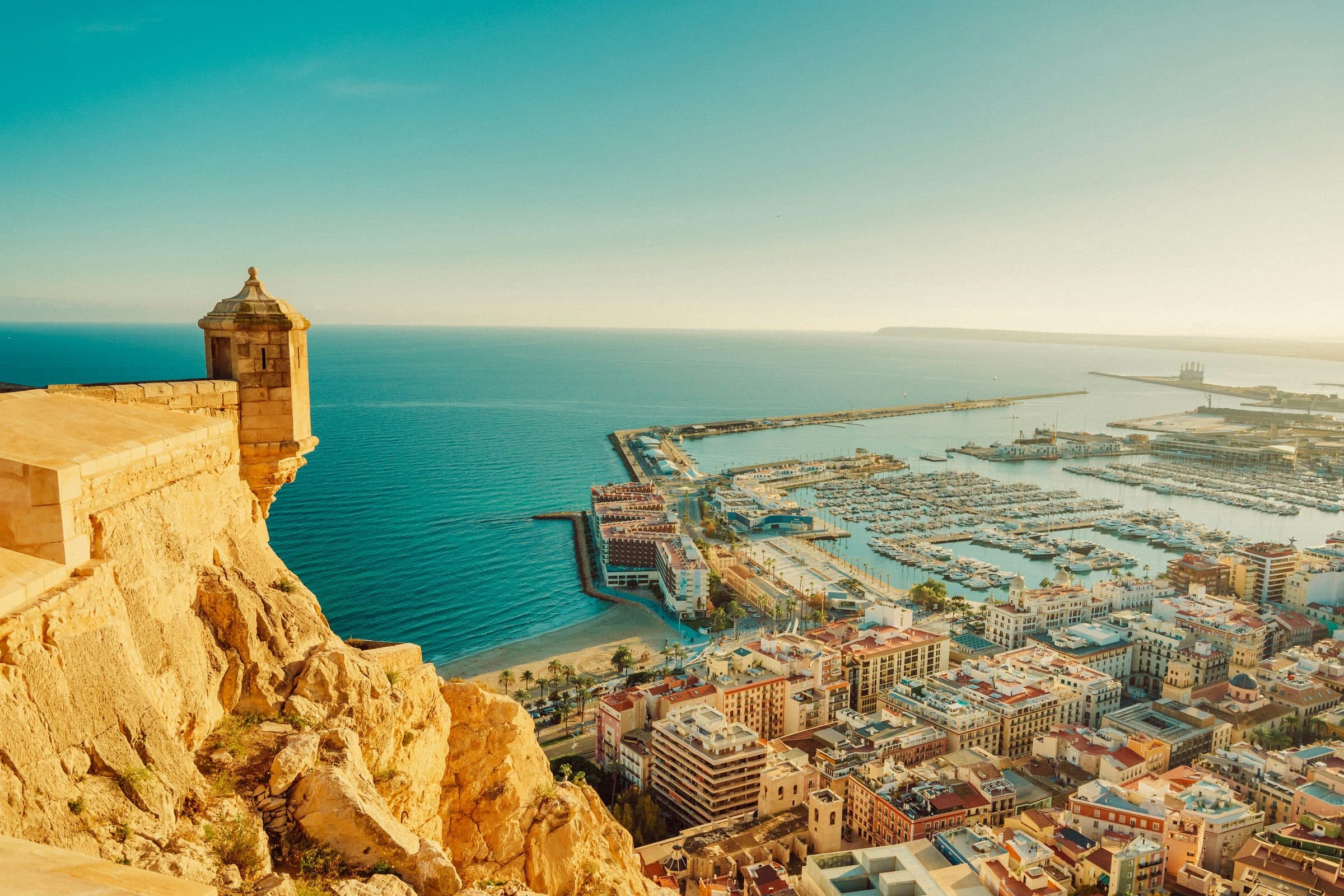
The climate is the quiet lead role With around 2,900 hours of sunshine and just 280 millimetres of rain per year, this is one of the driest, sunniest corners of Europe. Winters are mild, summers dry and warm, and sitting outside is possible almost all year.
You get a lot of home for your money here Entry prices are noticeably lower than on the Costa del Sol or the Costa Blanca North, while amenities, beaches and accessibility are fully-fledged. That is why many buyers begin their search right here.
A community that is already established International residents have lived here for decades, with their own associations, international care and shops with familiar products. Your integration does not start from zero.
Accessibility makes it feasible Alicante airport is 15 to 55 minutes from the zones in this region, with daily flights from Schiphol, Eindhoven, Rotterdam and Brussels. Murcia is the second airport within an hour.
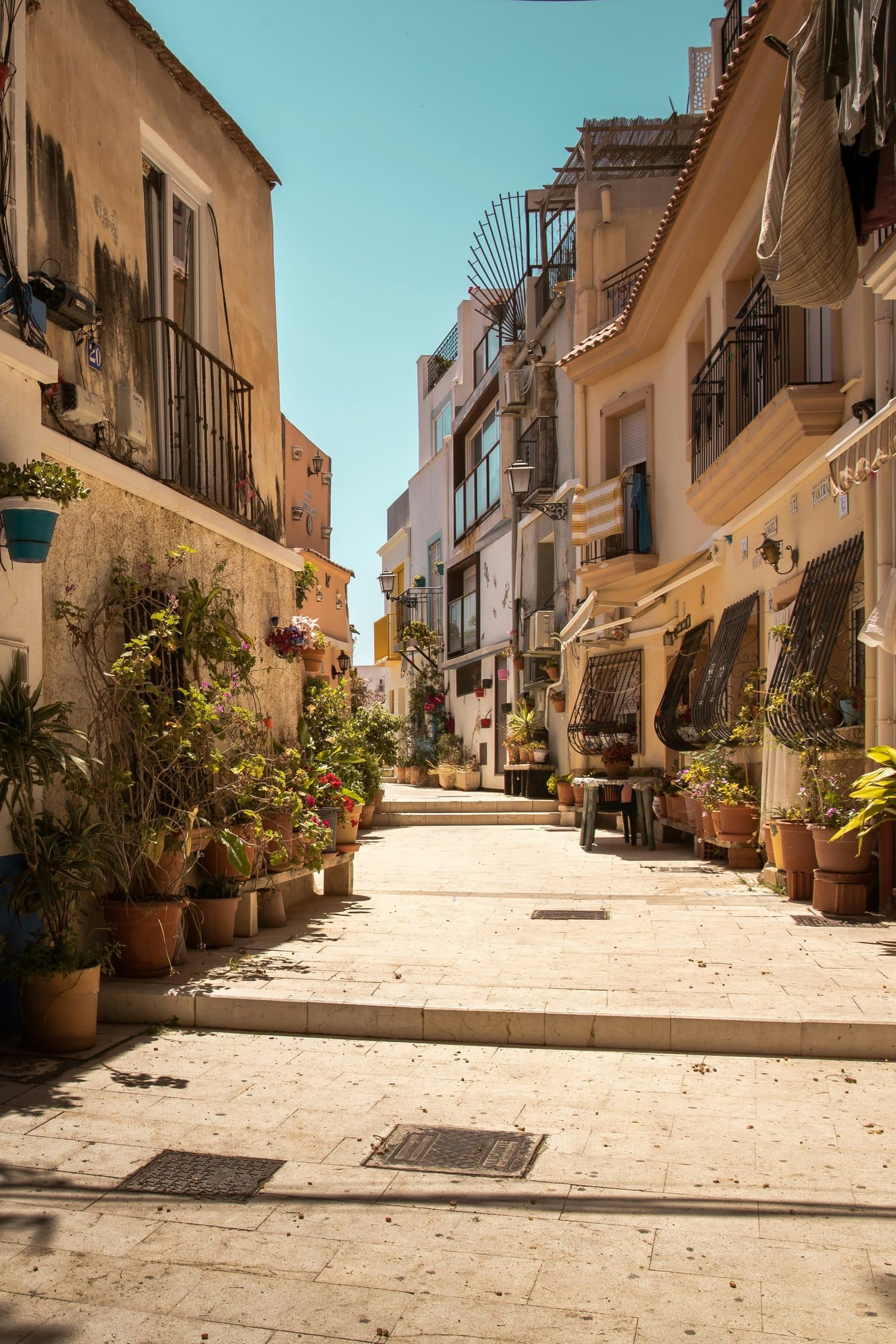
Variety within a single region From urban Alicante to village-like Pilar de la Horadada, from lively Torrevieja to golf urbanisations near Orihuela Costa. Five different characters along some seventy kilometres of coast.

The Costa Blanca South is not one place, it is five places. Between Alicante in the north and Pilar de la Horadada on the border with Murcia lie characters that differ strongly from one another. For most clients, one zone simply suits better.
01Lively, year-round amenities, pink salt lakes as a backdrop.
Budget up to ±€300k, overwinterers, first second home.
Apartments, bungalows, penthouses along the boulevard.
02Golf and beach, international urbanisations, plenty of new-build.
Budget ±€200k to €600k, families, golfers, rental buyers.
Townhouses, golf apartments, villas.
03Spanish city by the sea, boulevard, culture, lively year-round.
City people, remote workers, those who want to live without a car.
City apartments, historic buildings.
04Fishing town with a working harbour plus quiet urbanisations.
Peace-seekers, families, frequent flyers.
Apartments, bungalows with a communal pool.
05More village-like and more Spanish, with the beaches of Mil Palmeras.
Peace, regulars who return every year, price-conscious buyers.
Bungalows, villas, apartments within walking distance of the sea.
Tell us what matters to you (peace, social life, golf, sea, city) and we will make a first recommendation per zone.
The towns and villages of this region will appear here soon.
The Costa Blanca South is among the driest and sunniest strips of the Spanish mainland: around 280 millimetres of rain per year, and in July often nothing falls at all. The monthly figures below are long-term averages for the coastal strip around Torrevieja and Alicante.
Averaged across the coastal strip; the flat hinterland shows almost the same picture. In winter you still get six hours of sun a day here.
Autumn brings short, sometimes heavy showers; between May and September it stays virtually dry, sometimes for weeks.
The salt lakes of Torrevieja and La Mata noticeably temper the climate around the town. By the sea a light breeze almost always blows; the interior is a few degrees warmer in summer.
Not the crowds of summer, not the short showers of the autumn peak. You see the urbanisations as they are for most of the year. August is too busy to view realistically.
Alicante airport (ALC) is a quarter of an hour from Santa Pola and 40 to 55 minutes from Torrevieja and Orihuela Costa. Direct flights from Schiphol, Eindhoven, Rotterdam and Brussels, up to dozens per week in season. Murcia airport (RMU) is the second airport, around three quarters of an hour from Torrevieja.
From Northern Europe roughly 20 to 21 hours of driving via France. With a stopover near Lyon or Barcelona it is comfortably doable in two days. The AP-7 is toll-free in this region.
The AVE takes you from Alicante to Madrid in around 2 hours and 25 minutes, connecting to the European high-speed network.
The N-332 and AP-7 connect all coastal towns. The terrain is flat, cycling is genuinely an option here, and Alicante has a tram network along the north coast.
The southern Costa Blanca has one of the largest international communities in Spain, with Torrevieja as its centre of gravity. It is not an expat bubble, it is a network that has been established for decades.
There are active international associations in Torrevieja and the surrounding area for residents and overwinterers alike, there are care providers used to international patients in the zone, and shops with familiar products.
Part of this community moves in the same circle; association activities are emphatically open to everyone.

Officially registered in the zone, plus an estimated equal group of overwinterers and second-home owners.
GPs, dentists and physiotherapists used to international patients, concentrated around Torrevieja and Orihuela Costa.
Including established international associations, with regular drop-in mornings and activities.
International associations open to residents and overwinterers alike.
International shops in and around Torrevieja; familiar products in the large supermarkets along the coast.
The international education offering is smaller here than on the Costa del Sol, but the quality of the best schools is beyond doubt. El Limonar International School (ELIS Villamartín) is the international reference for the zone: British curriculum from ages 3 to 18, with school bus routes across virtually the whole region, from Orihuela Costa and Torrevieja to Pilar de la Horadada.
In addition, the Spanish public and bilingual system is a fully-fledged route for families coming for the long term, certainly for young children. Towards Elche and Alicante city the offering is growing, including British education with an IB route.
The choice depends on how long you are coming and what you want for your child. We are happy to think along about the school choice as part of the zone choice.
School fees range from €0 (public bilingual) to a higher amount per year (private international). We connect you with an education adviser when the choice becomes complex.
The Spanish healthcare system consists of two parts: the public SNS and a broad private offering. SNS is free of charge for those with an EU pension or work rights, and of a European-level quality. Waiting times for non-urgent specialist care can be longer; that is why a large group of foreigners opt for a supplementary private policy.
The Hospital Universitario de Torrevieja is used to international patients; in addition you have private options such as Quirónsalud Torrevieja and, towards Elche, IMED. The public Hospital Vega Baja in Orihuela covers the hinterland.
For those of pension age with an EU state pension, the S1 form applies: you keep your care rights in Spain, and your home-country health insurance does not need to continue.
A broad picture to calibrate expectations. Within each range there are large differences based on year of construction, condition, view and exact location. We give you a refined estimate per search profile. For reference: the average asking price is around €2.500 per m² in Torrevieja and around €3.000 per m² in Orihuela Costa (idealista, spring 2026).
Prices excluding ITP (9% in the Valencia region as of 1 June 2026; 11% above €1 million) or, for new-build, 10% VAT plus 1,4% AJD; in addition notary and registration (together 1 to 2%).
Updated quarterly based on market data and our own transactions.
Off-market supply may fall below or above this range.

I'm originally from Amsterdam and now live in Benissa Costa. I love helping people make their dream of a home in Spain come true, across all budgets on the Costa Blanca. I know the region inside out, from daily life to the property market.
I often hear about quiet listings early through my network, before they officially come to market. Clients most often describe my guidance as friendly and helpful, because I genuinely listen and help you honestly with such a big decision.
Friendly, helpful and always honest.
The Costa Blanca South is a core area for us, but certainly not the only one. Four short side-by-side comparisons.
Sun-assured and affordable, with a strong international presence.
Greener and hillier, Jávea and Moraira, higher price point.
Urban and Mediterranean, young international scene, the lifestyle city par excellence.
More cosmopolitan and larger in scale, premium offering on the west coast.
The questions we get most often about living on the Costa Blanca South. Missing something? Ask Denise directly.
Start with accessibility: can the region be reached in a single day by car, and how many flights are there in winter? Then look at the climate and the character of the area, because a rural village, a lively city and a holiday resort feel completely different. Also decide how much time you want to spend there and with whom: if you emigrate with children, schools matter, if you overwinter as a retiree, climate and international care count more heavily. We think along with you based on your situation.
An hour with Denise gives you more concrete information than ten hours of Google. She tells you what fits, what does not fit, and which zone suits your situation.